



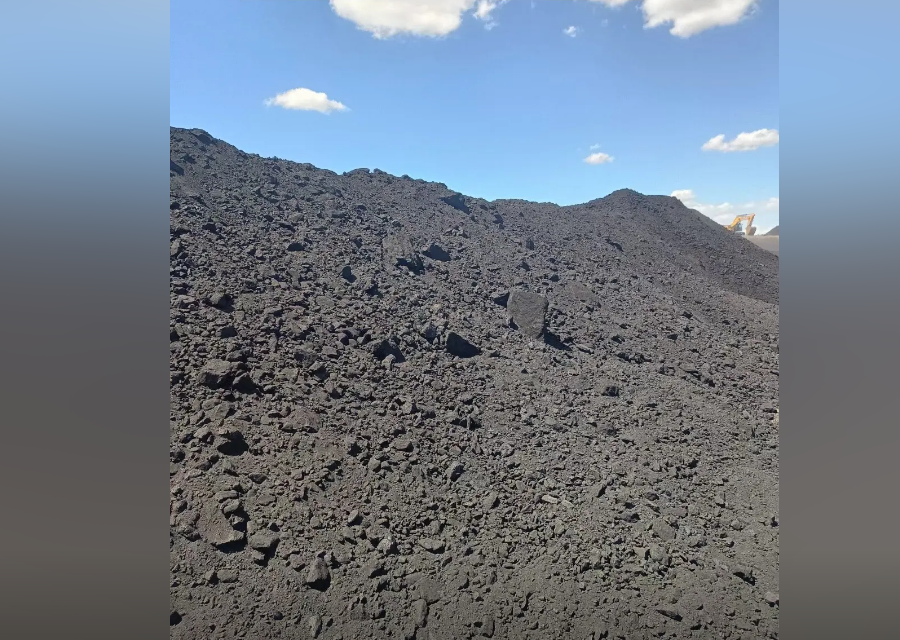
HCM Humic Acid Milling Equipment Factory learned that Brazil's Massari Fértil recently launched a patented humic acid activation technology and a brand-new fertilizer product line, achieving significant yield increases for various crops. Brazil's agriculture faces problems such as climate change, soil degradation and insufficient fertility. These issues are particularly prominent in the Cerrado region, where the acidic and low-fertility oxisols relied on for agricultural expansion require extensive improvement and fertilization solutions.
Massari Fértil, a Brazilian soil improvement and nutrition company, has combined the humic acid substances derived from weathered lignite by Monty's with its local mineral fertilizer technology through its patented humic acid activation technology. The technology involves special treatment of weathered lignite raw materials, followed by regulating pH value, temperature, pressure, time and stirring parameters to activate humic acid molecules. It is claimed to have higher solubility and biological activity compared with traditional extraction methods. The new fertilizers produced by humic acid activation technology support Massari's expansion strategy with an annual growth rate of 20%, including the commissioning of new facilities in northern, southeastern and midwestern Brazil.
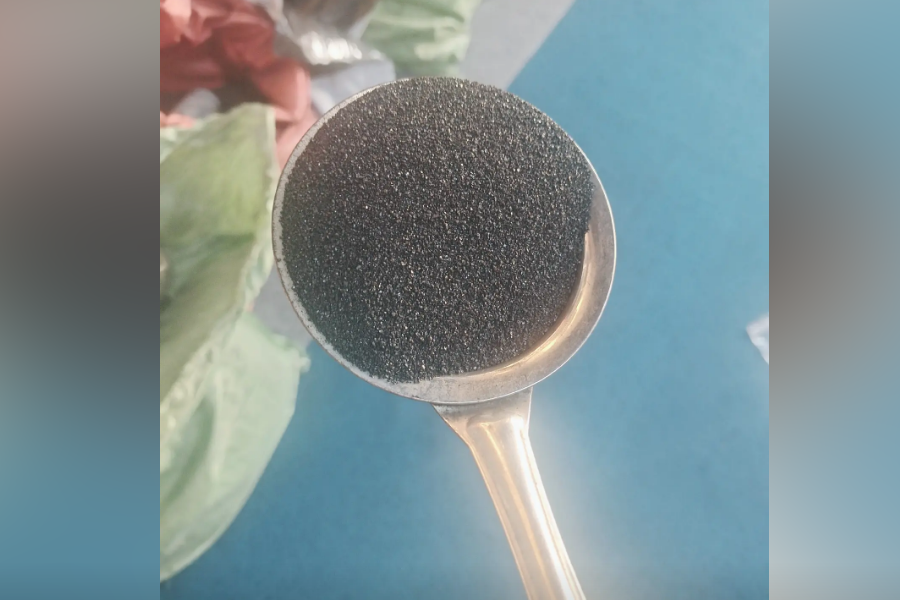
Field trial data of new fertilizer products produced by Massari Fértil's patented humic acid activation technology shows yield-increasing effects:
Massari cited 2021-2025 trial data from its Brazilian partners with Monty's: soybeans achieved a maximum yield increase of 14 bags per hectare (about 840 kg), and corn reached 22 bags per hectare (1320 kg). Cotton trials in Mato Grosso state achieved a yield increase of 570 kg per hectare. Based on the conventional yield baseline, these data are equivalent to a 21-28% yield increase for soybeans (baseline 3000-4000 kg/ha), 18-22% for corn (baseline 6000-7500 kg/ha), and 14-19% for cotton (baseline 3000-4000 kg/ha). The actual effects still need to be comprehensively evaluated based on test protocols, statistical significance, environmental conditions and economic thresholds.
1.Process flow of humic acid fertilizer production:
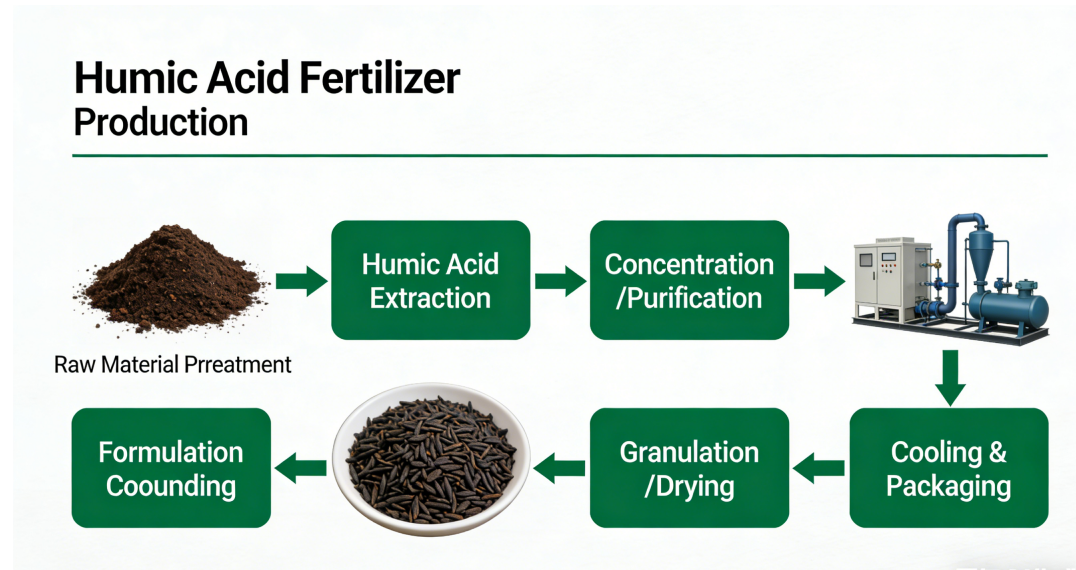
The production of humic acid fertilizer is generally divided into six steps: raw material pretreatment → humic acid extraction → concentration/purification → formula compounding → granulation/drying → finished product packaging. Different enterprises will make adjustments according to raw materials (weathered coal, lignite, peat) and product types (humic acid raw powder, sodium humate, potassium humate, humic acid compound fertilizer). The key technical control points in the humic acid fertilizer production process are as follows: the humic acid content of raw materials should be ≥ 30% to have industrial value; the pH value for alkaline extraction should be controlled at 10–11; reaction temperature and time affect the extraction rate; solid-liquid separation effect determines product purity; improper control of granulation moisture will lead to caking or pulverization.
2.Is milling equipment required for humic acid fertilizer production?
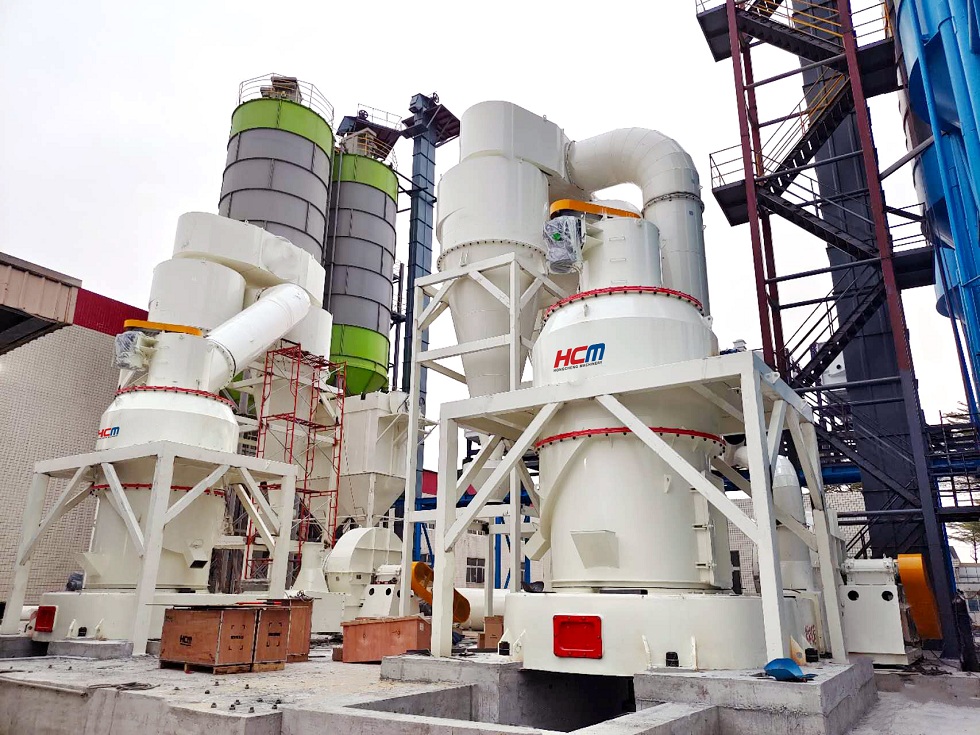
In the production process of humic acid fertilizer, it is necessary to pretreat humic acid raw materials. The raw materials include weathered coal, lignite, peat, etc. Although the raw materials have low hardness, their particle size is large. They must be first crushed and then milled to improve the subsequent extraction efficiency. For the production of humic acid powder fertilizer, potassium/sodium humate powder, and the addition of humic acid to compound (mixed) fertilizer, the final product also needs to be milled to a certain fineness, usually 80–120 mesh, and some require 200 mesh. After milling, the raw materials have a larger specific surface area, which makes the reaction more sufficient in processes such as alkaline extraction, acid precipitation and solid-liquid separation, and significantly improves the extraction rate of humic acid.
3.Milling equipment selection scheme for humic acid fertilizer production line:
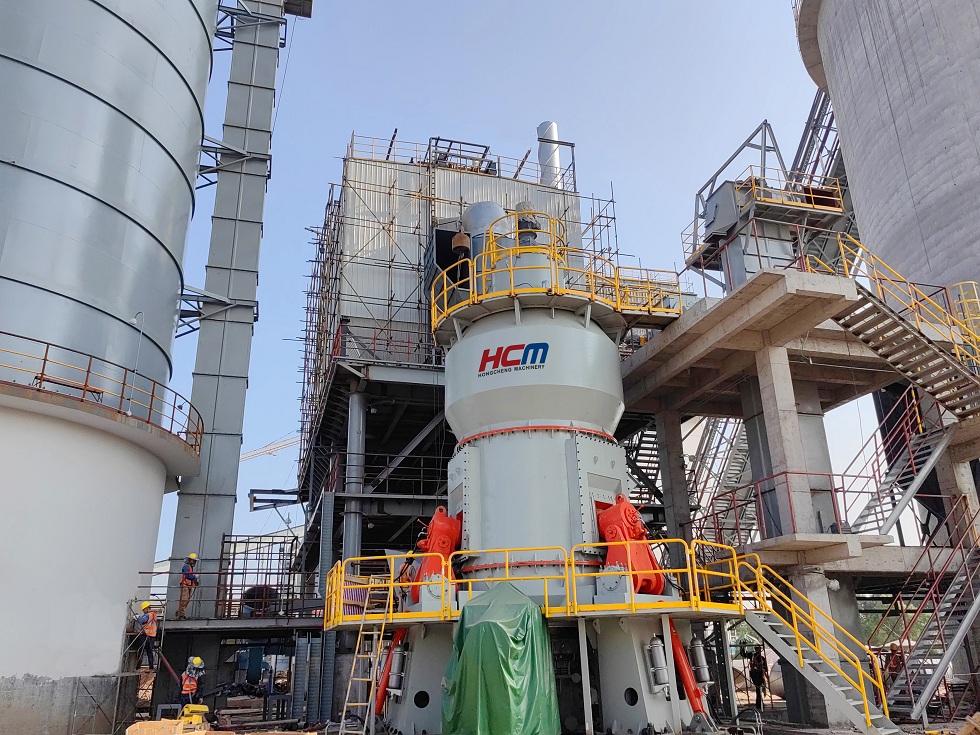
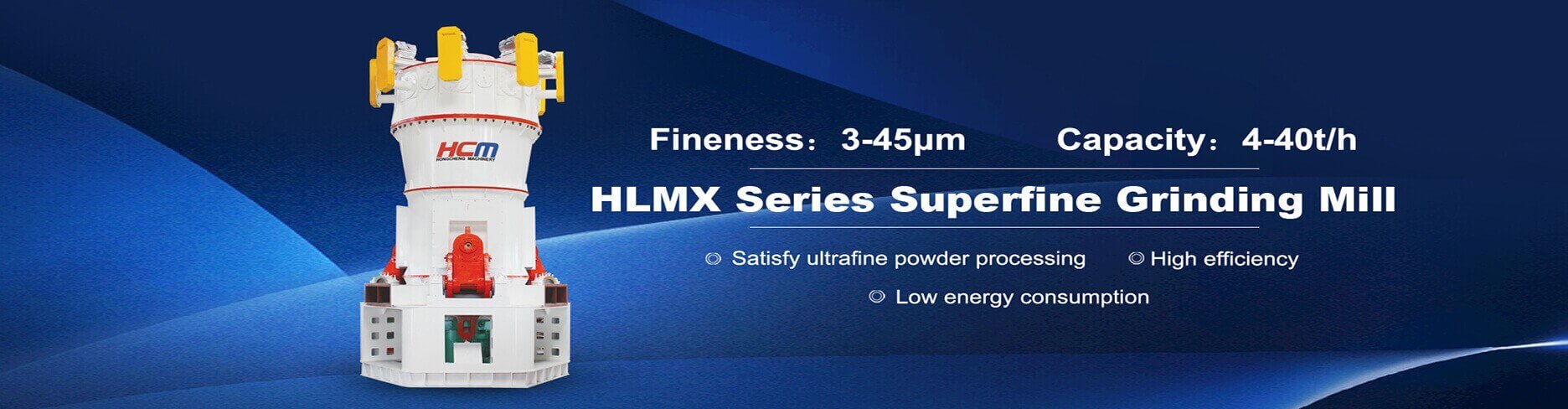
HCM Milling Machine has developed and produced HC series Raymond mills, HLM large vertical mills, HLMX ultra-fine vertical mills and HCH ring roller mills. These mills can grind humic acid raw materials such as weathered coal, lignite and peat to 80-3000 mesh. After milling, the raw materials have a larger specific surface area, which makes the reaction more sufficient in processes such as alkaline extraction, acid precipitation and solid-liquid separation, and significantly improves the extraction rate of humic acid. For information on the process technology of grinding humic acid raw materials (weathered coal, lignite, peat) with HCM mills, detailed parameters of the mills and detailed price lists, you can contact us for consultation.
contacts:Engineer Yao,e-mail:[email protected], Wechat:18878317068
